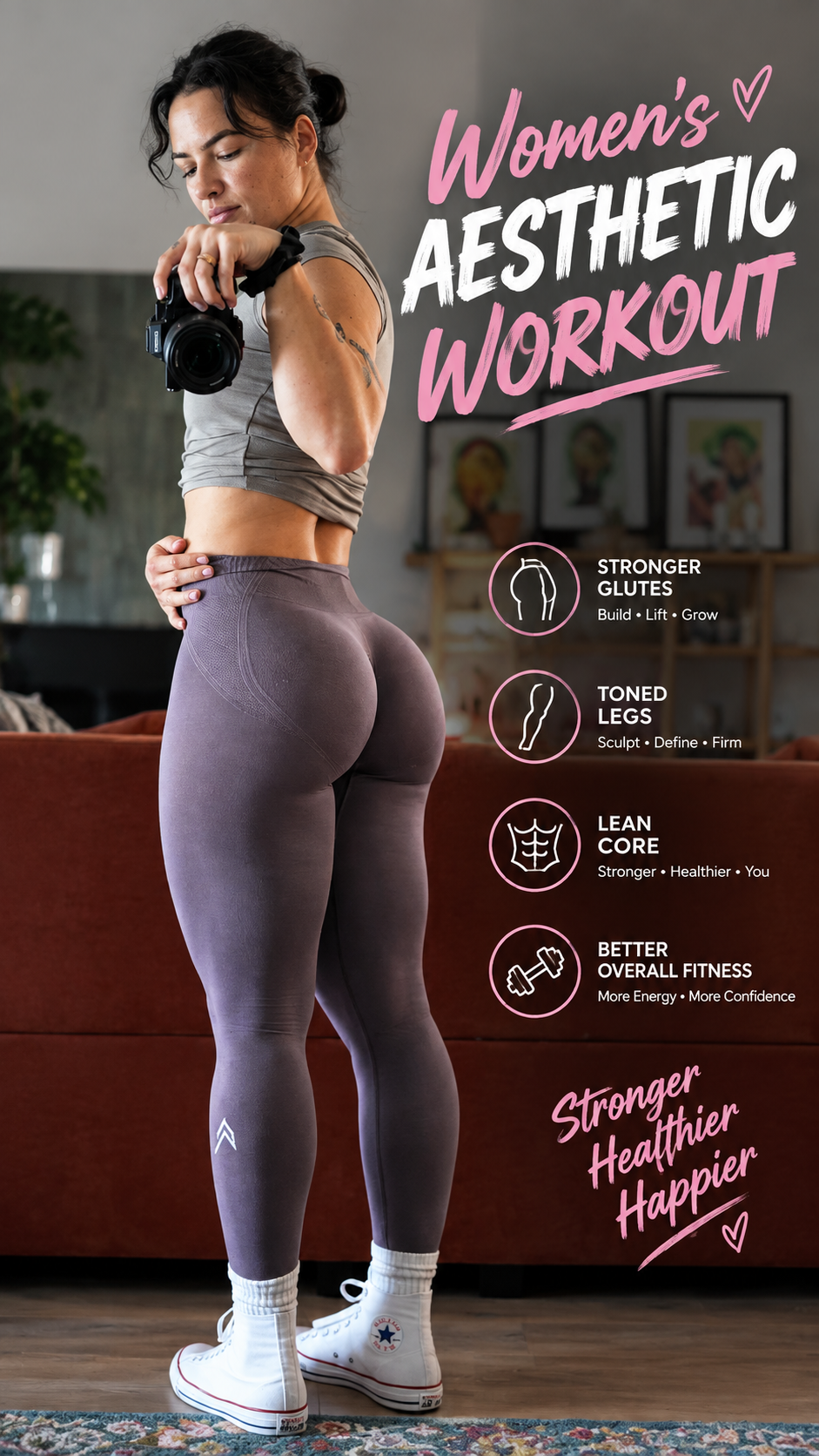
Building a strong, toned physique isn’t about chasing quick fixes or spending hours doing endless cardio. It’s about following a structured, balanced training plan that develops muscle definition, improves posture, and supports overall strength. This women’s aesthetic workout is designed to help you do exactly that inside the gym. Whether you’re aiming for sculpted shoulders, a stronger lower body, or a more defined core, this routine covers the key movement patterns that contribute to a well-rounded, athletic look.
The plan below works well for intermediate lifters who already know their way around basic exercises, but it can also be adapted for beginners with a few modifications. You’ll find a full weekly schedule, exercise tables with sets and reps, form cues, progression strategies, and tips to help you train consistently. If you’re new to structured training, you may want to start with a beginner leg workout or a general full-body routine before jumping into this split.
By the end of this guide, you’ll understand how to organize your week, which exercises to prioritize, and how to progress safely over time. Let’s get into it.
What Makes a Workout “Aesthetic”?
The term “aesthetic” in fitness usually refers to training with a focus on muscle shape, proportion, and symmetry rather than pure strength or size. For many women, that means developing the glutes, shoulders, back, and core while keeping the waist area strong but not overly bulky. It also involves improving posture, which can dramatically change how your physique looks.
An aesthetic-focused routine typically includes:
- Compound lifts for overall strength and muscle development
- Isolation exercises to target specific muscles like the glutes, side delts, or hamstrings
- Consistent progression to keep challenging the muscles
- Balanced training that hits both upper and lower body
- Recovery and nutrition to support muscle repair and growth
This routine is built around those principles. It’s not about lifting as heavy as possible every session, but about training smart, using good form, and gradually increasing difficulty over time.
The Weekly Gym Routine
This is a four-day split with an optional fifth day for glutes or conditioning. It’s designed to be done in a gym with access to free weights and machines. If you train at home, you can substitute some exercises with dumbbell or resistance band versions.
| Day | Focus |
|---|---|
| Day 1 | Lower Body – Glutes & Hamstrings |
| Day 2 | Upper Body – Back, Shoulders & Arms |
| Day 3 | Rest or Light Cardio |
| Day 4 | Lower Body – Quads & Glutes |
| Day 5 | Upper Body – Chest, Shoulders & Core |
| Day 6 | Optional Glute or HIIT Session |
| Day 7 | Rest |
This schedule gives each muscle group enough time to recover while still training frequently enough to see progress. If you prefer a three-day split, you can combine the upper-body days into one session and drop the optional day.
Day 1: Glutes & Hamstrings
This session focuses on the posterior chain — the muscles that give your lower body a rounded, lifted appearance. The glutes and hamstrings work together in hip hinge movements, so training them on the same day is efficient and effective. If you want more variety, you can explore other glute-focused workouts after a few weeks.
| Exercise | Sets | Reps | Rest |
|---|---|---|---|
| Barbell Hip Thrust | 4 | 8–10 | 90 sec |
| Romanian Deadlift | 3 | 10–12 | 90 sec |
| Walking Lunges | 3 | 10 each leg | 60 sec |
| Cable Kickbacks | 3 | 12–15 each leg | 45 sec |
| Lying Leg Curl | 3 | 12–15 | 45 sec |
Form Cues
- Hip Thrust: Keep your chin tucked, ribs down, and squeeze your glutes at the top. Avoid overextending your lower back.
- Romanian Deadlift: Hinge at the hips, keep a slight bend in the knees, and lower the bar along your legs. Feel the stretch in your hamstrings.
- Walking Lunges: Take a long enough step so your front knee stays roughly above your ankle. Keep your torso upright.
- Cable Kickbacks: Use a controlled tempo. Don’t swing the weight; focus on squeezing the glute at the end range.
- Leg Curl: Avoid lifting your hips off the pad. Keep the movement smooth and controlled.
Beginner Modification
If you’re new to these movements, start with bodyweight hip thrusts or glute bridges, reduce the range of motion on the Romanian deadlift, and do reverse lunges instead of walking lunges. For more ideas, check out this beginner leg workout.
Day 2: Back, Shoulders & Arms
Upper-body training is often overlooked by women who focus only on lower body, but a strong back and shoulders improve posture, create the illusion of a smaller waist, and help balance your physique. This session targets the muscles that contribute to that “toned” look.
| Exercise | Sets | Reps | Rest |
|---|---|---|---|
| Lat Pulldown | 4 | 10–12 | 60 sec |
| Seated Cable Row | 3 | 10–12 | 60 sec |
| Dumbbell Shoulder Press | 3 | 10–12 | 60 sec |
| Lateral Raises | 3 | 12–15 | 45 sec |
| Bicep Curls | 3 | 12–15 | 45 sec |
| Tricep Pushdowns | 3 | 12–15 | 45 sec |
Form Cues
- Lat Pulldown: Pull with your elbows, not your hands. Keep your chest up and avoid leaning back excessively.
- Seated Cable Row: Squeeze your shoulder blades together at the end of the movement. Don’t round your back.
- Shoulder Press: Press straight up without flaring your ribs. Keep your core braced.
- Lateral Raises: Lead with your elbows, not your wrists. Keep the movement slow and controlled.
- Bicep Curls: Avoid swinging your body. Keep your elbows pinned to your sides.
- Tricep Pushdowns: Keep your elbows close to your body and fully extend your arms at the bottom.
Beginner Modification
Use lighter weights and focus on learning the movement patterns. If you can’t do a full set of lateral raises, try doing them seated or with resistance bands. For a broader introduction to upper-body training, look for a beginner-friendly upper body routine on the site.
Day 4: Quads & Glutes
This day emphasizes the front of your legs and adds more glute volume. The quads respond well to a mix of heavy compound movements and higher-rep isolation work. When paired with the hip hinge focus from Day 1, this creates a well-rounded lower-body training approach.
| Exercise | Sets | Reps | Rest |
|---|---|---|---|
| Barbell Squat | 4 | 8–10 | 90 sec |
| Bulgarian Split Squat | 3 | 10 each leg | 60 sec |
| Leg Press | 3 | 12–15 | 60 sec |
| Leg Extension | 3 | 15–20 | 45 sec |
| Standing Calf Raises | 4 | 15–20 | 30 sec |
Form Cues
- Barbell Squat: Keep your chest up, brace your core, and descend until your thighs are at least parallel to the floor if mobility allows.
- Bulgarian Split Squat: Keep your front shin vertical and lower under control. Don’t let your back knee slam into the floor.
- Leg Press: Avoid locking out your knees at the top. Keep your lower back pressed against the pad.
- Leg Extension: Pause briefly at the top of the movement and lower slowly.
- Calf Raises: Go through a full range of motion — stretch at the bottom and squeeze at the top.
Beginner Modification
Swap the barbell squat for a goblet squat or box squat. For Bulgarian split squats, hold onto a rack or wall for balance, or do static lunges instead. If you’re looking for a complete lower-body plan, this thigh and leg workout may help.
Day 5: Chest, Shoulders & Core
This session rounds out the week with a focus on the chest, rear delts, and core. Training the core is important for stability and posture, but remember that core exercises strengthen the abdominal muscles — they don’t directly burn belly fat. Fat loss is influenced by overall energy balance, nutrition, sleep, and activity level.
| Exercise | Sets | Reps | Rest |
|---|---|---|---|
| Dumbbell Bench Press | 3 | 10–12 | 60 sec |
| Incline Dumbbell Press | 3 | 10–12 | 60 sec |
| Rear Delt Fly | 3 | 12–15 | 45 sec |
| Plank | 3 | 30–60 sec | 45 sec |
| Hanging Knee Raises | 3 | 10–15 | 45 sec |
| Cable Crunches | 3 | 12–15 | 45 sec |
Form Cues
- Dumbbell Bench Press: Keep your wrists stacked over your elbows and lower the weights to chest level.
- Incline Press: Use a moderate incline (around 30 degrees) to target the upper chest.
- Rear Delt Fly: Keep a slight bend in your elbows and lead with your pinkies.
- Plank: Squeeze your glutes and brace your core. Don’t let your hips sag.
- Hanging Knee Raises: Avoid swinging. Use a slow, controlled tempo.
- Cable Crunches: Round your upper back slightly and pull with your abs, not your arms.
Beginner Modification
For the plank, start with knee planks or incline planks. If hanging knee raises are too difficult, do lying leg raises or dead bugs. For more core options, explore these core strengthening exercises.
Optional Day 6: Glute or HIIT Session
If you recover well and want extra volume, you can add a sixth day. Choose one of the following:
- Glute-focused session: Banded glute bridges, cable kickbacks, hip abductions, and step-ups.
- HIIT session: 15–20 minutes of intervals on a bike, rower, or treadmill. For a full plan, check out this at-home HIIT routine.
Keep this day lighter and avoid going to failure. The goal is to add stimulus, not to exhaust yourself.
How to Progress Over Time
Progressive overload is the key to making any workout plan effective. Without it, your muscles adapt and stop changing. Here are several ways to progress:
- Increase weight: Add small increments (2.5–5 lbs) when you can complete all sets with good form.
- Add reps: If you can’t increase weight yet, aim for the top of the rep range before adding load.
- Add sets: Gradually add one set to a key exercise every few weeks.
- Slow the tempo: Lower the weight more slowly to increase time under tension.
- Reduce rest: Slightly shorten rest periods to increase density, but don’t sacrifice form.
- Improve range of motion: Work toward fuller, more controlled reps.
Track your workouts in a notebook or app so you know when to push and when to hold back.
Tips for Getting the Most Out of This Routine
- Warm up properly. Spend 5–10 minutes on light cardio and dynamic stretches before lifting.
- Prioritize sleep. Muscle repair happens during rest, not during the workout.
- Eat enough protein. Aim for a consistent intake throughout the day to support recovery.
- Stay consistent. Four solid sessions per week will outperform sporadic training every time.
- Don’t skip rest days. Recovery is part of the plan, not a break from it.
- Adjust for your cycle. Energy levels can fluctuate — listen to your body and scale back when needed.
- Focus on posture. Strengthening your back and rear delts will improve how your physique looks and feels.
- Be patient. Visible changes take time. Trust the process and keep showing up.
Common Mistakes to Avoid
- Ego lifting: Using too much weight leads to poor form and injury risk.
- Skipping warm-ups: Cold muscles are more prone to strains.
- Neglecting upper body: A balanced physique requires training more than just glutes and legs.
- Doing too much volume: More isn’t always better. Overtraining can stall progress.
- Ignoring progression: If you do the same weights and reps every week, your body has no reason to adapt.
- Poor exercise order: Do compound lifts before isolation exercises.
- Not tracking: Without records, it’s hard to know if you’re improving.
Frequently Asked Questions
How often should I do this women’s aesthetic workout?
Four days per week is ideal for most intermediate lifters. If you’re a beginner, start with three days and add the fourth when you feel ready. The optional fifth day should only be added if you’re recovering well between sessions.
Can I do this routine at home?
Yes, with adjustments. Replace machines with dumbbells, resistance bands, or bodyweight variations. Hip thrusts can be done with a dumbbell or band. For a complete home setup, you’ll need a bench, dumbbells, and bands, but many exercises can be modified further if needed.
How long does each session take?
Most sessions take 45–60 minutes, including warm-up. If you’re short on time, superset opposing muscle groups or reduce rest periods slightly. Avoid rushing through sets just to finish faster.
Will this workout make me bulky?
No. Building visible muscle requires a calorie surplus, consistent training, and genetics. This routine is designed to improve muscle tone, strength, and shape — not to create excessive bulk. Many women find that training with weights actually creates a leaner, more defined look.
How do I know when to increase weight?
When you can complete all prescribed sets and reps with good form and feel you could do a few more, it’s time to add weight. Increase in small increments and prioritize form over numbers.
What should I eat to support this routine?
Focus on a balanced diet with enough protein, complex carbohydrates, and healthy fats. There’s no single “aesthetic” diet, but consistency and adequate protein intake support muscle repair and recovery.
Conclusion
A strong, toned physique is built through balanced training, consistent effort, and smart progression. This women’s aesthetic workout gives you a structured gym routine that targets the muscles that matter most for shape, posture, and overall strength. Use the tables as a guide, modify exercises when needed, and progress gradually over time.
Remember that results take patience. There are no shortcuts, but there is a sustainable path. Train hard, recover well, and enjoy the process. For more workout ideas — from glute-focused sessions to core routines and HIIT plans — explore the growing fitness library on workout.serile.com. Your next great workout is waiting.