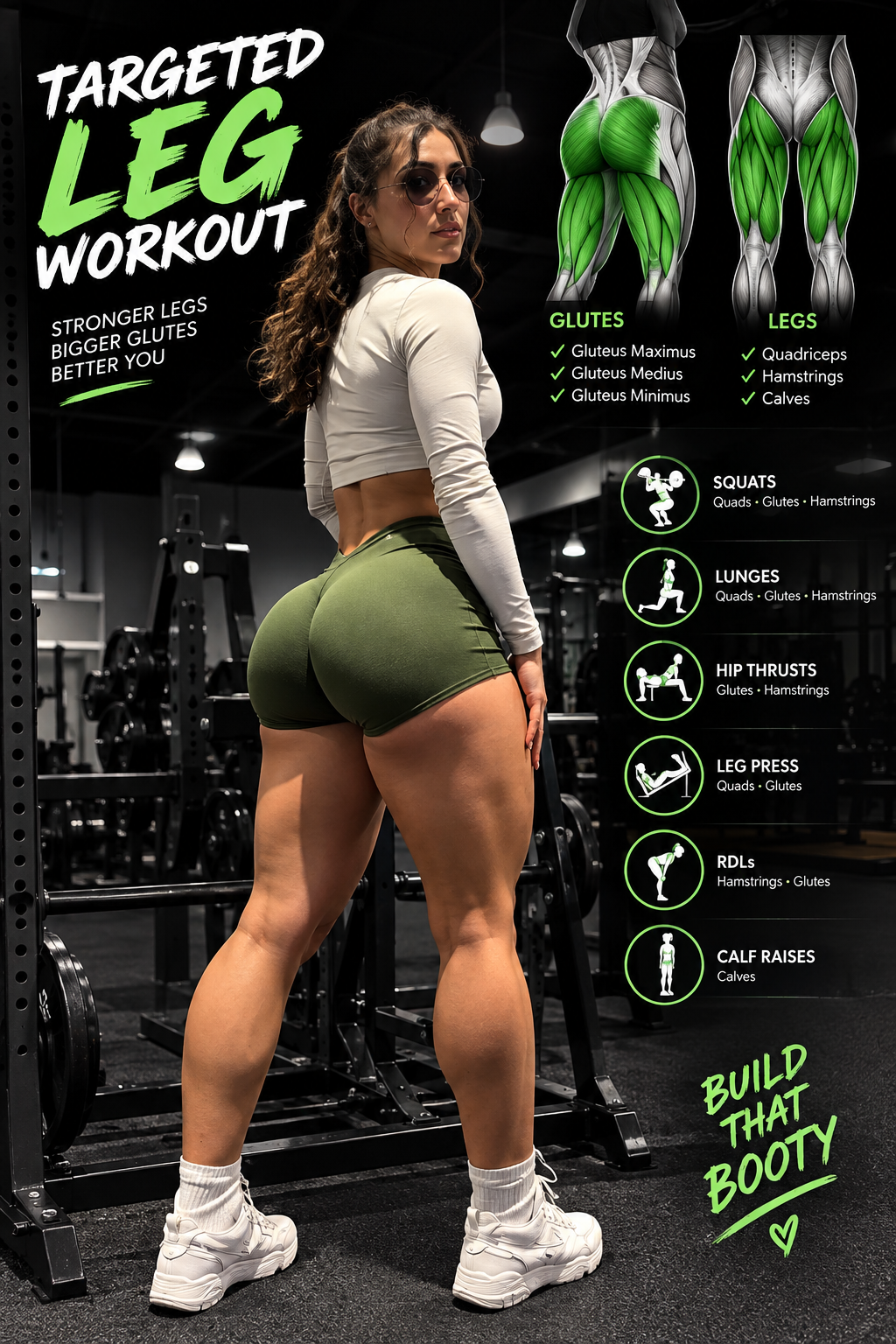
A strong lower body supports almost everything you do — walking, climbing stairs, carrying groceries, and lifting in the gym. If you have been searching for a leg workout that trains your quads, hamstrings, and calves without overcomplicating things, this guide walks you through ten effective exercises you can do at home or in the gym.
We will cover how to perform each movement, how many sets and reps to aim for, beginner-friendly modifications, and simple ways to progress over time. Whether you are new to strength training or looking to refresh your current routine, this workout can be adapted to your experience level and available equipment.
Consistency and good technique matter far more than doing the hardest variation on day one. Let’s break down the exercises, the workout structure, and the details that help you get the most from each session.
Why Train Your Quads, Hamstrings, and Calves Together?
The lower body works as a connected system. Your quads (front of the thigh) handle knee extension, your hamstrings (back of the thigh) drive hip extension and knee flexion, and your calves support ankle movement and push-off. Training all three in one session is efficient and helps you build balanced strength rather than developing one area while neglecting another.
A well-rounded leg workout can:
- Support everyday movements like squatting, lunging, and walking uphill
- Improve stability around the knees and hips when performed with control
- Contribute to overall strength training progress
- Add variety if you have been doing the same routine for months
Remember that muscle growth and strength gains depend on many factors, including training consistency, nutrition, sleep, and genetics. No single workout builds a specific shape overnight, but a structured plan performed regularly can help you get stronger over time.
Warm-Up Before Your Leg Workout
Five to eight minutes of light movement prepares your joints and muscles for loading. Keep it simple:
- 2–3 minutes of brisk walking, cycling, or marching in place
- 10 bodyweight squats
- 10 alternating reverse lunges
- 10 glute bridges
- 10 ankle circles per side
You should feel warmer and more mobile, not fatigued. If any movement causes sharp pain, stop and consider speaking with a qualified professional before continuing.
The 10 Best Leg Exercises
1. Goblet Squat
Targets: Quads, glutes, hamstrings, core
Hold a dumbbell or kettlebell close to your chest. Stand with feet about shoulder-width apart, toes slightly turned out. Push your hips back and bend your knees, lowering until your thighs are roughly parallel to the floor or as far as you can control comfortably. Keep your chest tall and knees tracking over your toes. Drive through your feet to stand.
2. Bulgarian Split Squat
Targets: Quads, glutes, hamstrings
Stand a step or two in front of a bench and place the top of one foot behind you on the bench. Lower your back knee toward the floor, keeping your front shin fairly vertical. Push through your front foot to return to the start. This exercise demands balance, so hold a wall or rack if needed while learning.
3. Romanian Deadlift
Targets: Hamstrings, glutes, lower back
Hold a barbell, dumbbells, or a kettlebell in front of your thighs. With a slight bend in your knees, hinge at the hips and lower the weight along your legs until you feel a stretch in your hamstrings. Keep your spine neutral and the weight close to your body. Squeeze your glutes to stand tall.
4. Walking Lunge
Targets: Quads, glutes, hamstrings
Step forward with one leg and lower until both knees are bent to roughly 90 degrees. Push off your front foot and step through with the back leg to continue forward. Keep your torso upright and avoid letting your front knee collapse inward.
5. Leg Press
Targets: Quads, glutes, hamstrings
Sit in the leg press machine with feet shoulder-width apart on the platform. Lower the platform by bending your knees toward your chest, then press away without locking your knees at the top. Keep your lower back in contact with the pad throughout.
6. Hamstring Curl
Targets: Hamstrings
Use a lying or seated hamstring curl machine, or a resistance band anchored to a low point. Curl your heels toward your glutes, pause briefly, then lower with control. Avoid swinging the weight or using momentum.
7. Hip Thrust
Targets: Glutes, hamstrings
Sit with your upper back against a bench and a barbell or dumbbell across your hips. Plant your feet flat, then drive your hips upward until your body forms a straight line from shoulders to knees. Squeeze your glutes at the top and lower with control.
8. Step-Up
Targets: Quads, glutes, calves
Place one foot on a sturdy box or bench at a height you can control. Push through that foot to step up, then lower back down slowly. Avoid pushing off the bottom leg too much — let the top leg do the work.
9. Standing Calf Raise
Targets: Calves
Stand with the balls of your feet on a step and your heels hanging off. Lower your heels for a stretch, then rise up onto your toes as high as possible. Pause at the top for a second before lowering.
10. Seated Calf Raise
Targets: Calves (especially the soleus)
Sit at a seated calf raise machine or place a weight on your thighs while seated. Press through the balls of your feet to lift your heels, pause, and lower slowly. Keep the movement controlled rather than bouncing.
Sample Leg Workout Routine
This structure works well for intermediate lifters. Beginners can reduce sets and choose the easier variations listed below.
| Exercise | Sets | Reps/Time | Rest |
|---|---|---|---|
| Goblet Squat | 3 | 10–12 | 60–90 sec |
| Romanian Deadlift | 3 | 8–10 | 90 sec |
| Bulgarian Split Squat | 3 | 8–10 per leg | 60–90 sec |
| Leg Press | 3 | 10–12 | 60–90 sec |
| Hamstring Curl | 3 | 12–15 | 60 sec |
| Hip Thrust | 3 | 10–12 | 60–90 sec |
| Standing Calf Raise | 4 | 12–20 | 45–60 sec |
| Seated Calf Raise | 3 | 15–20 | 45–60 sec |
Total time: roughly 45–60 minutes, including warm-up. If you are short on time, pick four to five exercises and still hit all three muscle groups.
Beginner Modifications
You do not need to perform every exercise at full intensity to benefit. Adjust as needed:
- Goblet Squat: Use bodyweight only or squat to a chair
- Bulgarian Split Squat: Replace with a standard split squat holding a wall for balance
- Romanian Deadlift: Use light dumbbells and focus on the hip hinge pattern
- Walking Lunge: Perform reverse lunges in place instead
- Leg Press: Reduce the range of motion and use lighter resistance
- Hip Thrust: Do glute bridges on the floor without added weight
- Step-Up: Use a low step and hold a rail for support
- Calf Raises: Perform them on flat ground instead of a step
Reducing reps, adding rest, and slowing down the movement are all valid ways to make a workout match your current level.
How to Progress Over Time
Once you can complete the prescribed sets and reps with good form and feel ready for more, apply one change at a time:
- Add 1–2 reps per set before increasing weight
- Add one extra set to your main lifts
- Increase resistance slightly (2.5–5 lbs or one band level)
- Slow the lowering phase to increase time under tension
- Reduce rest periods by 10–15 seconds gradually
- Move to a more challenging variation, such as elevating your front foot on split squats
Gradual progression is more sustainable than jumping to heavy loads too quickly. Give each change two to three weeks before adjusting again.
Common Mistakes to Avoid
- Cutting depth on squats: Only go as low as you can control while keeping your heels down and knees tracking forward
- Rounding the back on deadlifts: Hinge at the hips rather than bending your spine
- Letting the front knee cave inward on lunges: Keep it aligned with your toes
- Bouncing calf raises: Pause at the top and control the lowering phase
- Skipping the warm-up: Cold muscles perform worse and are more prone to discomfort
- Doing too much volume too soon: Soreness is normal, but extreme soreness can interfere with your next session
- Ignoring recovery: Muscles adapt during rest, not just during the workout
Tips for Getting the Most From This Leg Workout
- Train legs 1–2 times per week if you are also doing other strength work, allowing at least 48 hours before training the same muscles again
- Prioritize compound lifts first: Squats, deadlifts, and split squats deserve your freshest energy
- Log your workouts: Tracking sets, reps, and weight makes progression easier to plan
- Use a full range of motion rather than chasing heavier weights with partial reps
- Stay hydrated and eat enough protein to support recovery and training quality
- Sleep 7–9 hours when possible, since recovery directly affects performance
- Adjust for your equipment: Bands, dumbbells, and bodyweight variations can substitute for machines
Frequently Asked Questions
How often should I do this leg workout?
Once or twice per week is a practical starting point for most people, especially if you are also training other muscle groups. Allow at least 48 hours between sessions that heavily challenge the same muscles so they have time to recover. If you are new to strength training, start with once per week and add a second session once you feel comfortable with the movements.
Can beginners do this workout?
Yes, with modifications. Use lighter resistance, reduce the number of sets, and choose the easier variations listed above. Focus on learning each movement pattern before adding weight. It is perfectly fine to spend your first few weeks doing bodyweight squats, glute bridges, and supported split squats instead of loaded versions.
Do I need a gym for this leg workout?
No. You can perform most of these exercises with dumbbells, resistance bands, or just your bodyweight. Goblet squats, lunges, step-ups, hip thrusts, and calf raises all work well at home. Machine-based movements like the leg press and hamstring curl are convenient but optional — replace them with band or bodyweight alternatives.
How long does the full workout take?
Plan for roughly 45–60 minutes including the warm-up. If you are short on time, choose four exercises — one squat pattern, one hinge, one single-leg movement, and one calf exercise — and complete three sets of each. This shorter version still trains the main lower-body muscle groups effectively.
How do I make the workout harder as I improve?
Apply one progression at a time. Add reps, then add a set, then increase resistance. You can also slow down the lowering phase, reduce rest periods, or switch to a more demanding variation such as elevating your front foot on split squats. Avoid changing multiple variables at once so you can tell what is working.
Will this workout help me lose fat from my legs?
No exercise can target fat loss in a specific area. This leg workout strengthens your quads, hamstrings, and calves, which can improve muscle tone and overall strength. Fat loss is influenced by overall energy balance, nutrition, activity levels, sleep, genetics, and other individual factors rather than by any single exercise.
What should I do if an exercise causes pain?
Stop the movement if you feel sharp, unusual, or persistent pain. Mild muscle fatigue is expected during training, but joint pain or pain that lingers is not something to push through. Consider consulting a qualified healthcare or fitness professional for guidance tailored to your situation.
Conclusion
This leg workout gives you ten exercises that cover your quads, hamstrings, and calves in one structured session. Start with the movements that match your current experience level, follow the sets, reps, and rest guidelines, and progress gradually as your strength improves. Whether you train at home with minimal equipment or in a full gym, the same principles apply: controlled form, consistent effort, and adequate recovery.
If you enjoyed this routine, explore more lower-body and strength-training content on workout.serile.com — including glute-focused workouts, beginner leg routines, and full-body plans you can pair with this session. Pick your exercises, warm up, and give your next leg day a clear plan to follow.