
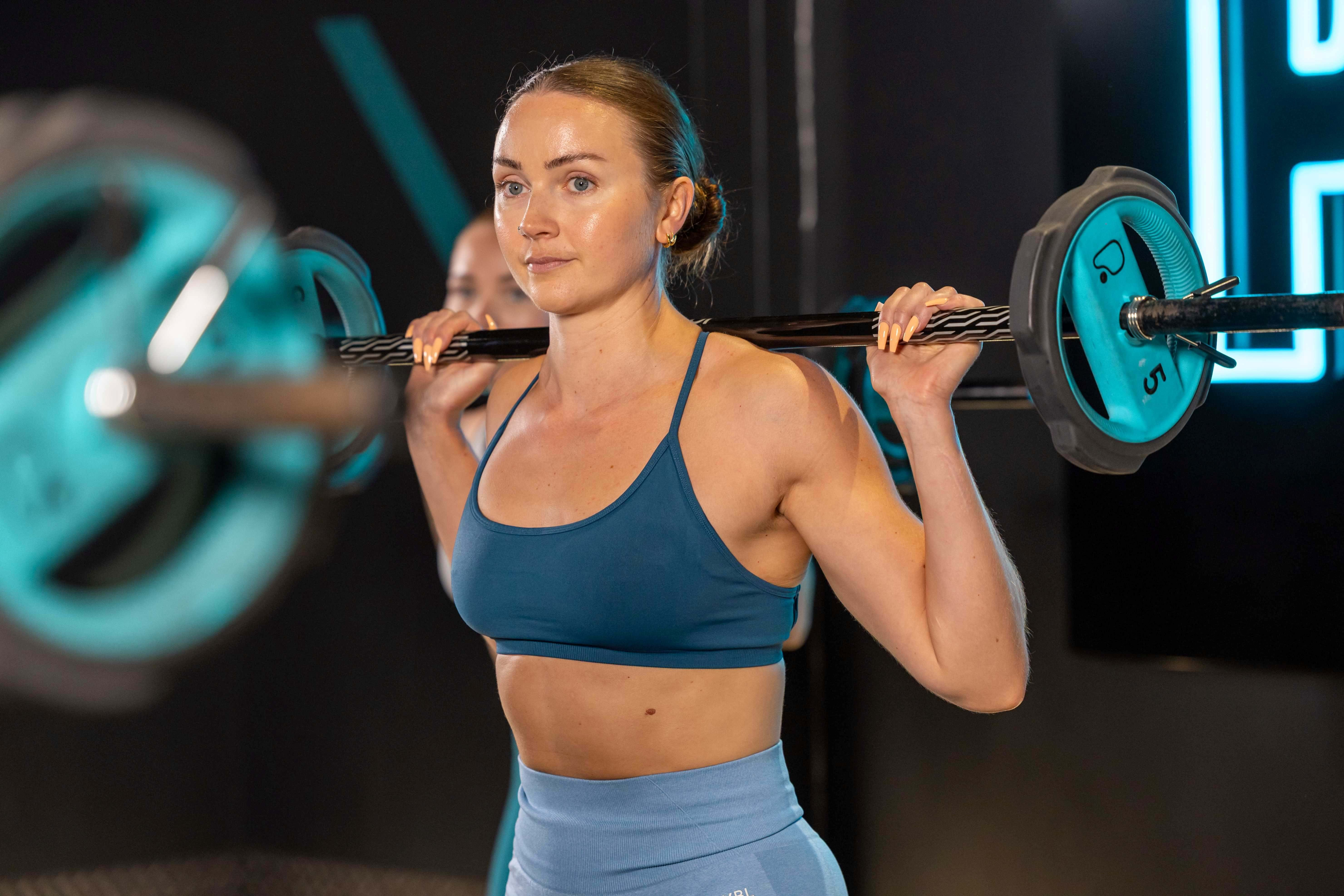
Building a complete full-body fitness routine does not require a gym full of machines or hours of training. What matters most is choosing effective exercises, performing them with solid form, and staying consistent enough to see progress over time. The 25 exercises in this guide cover every major muscle group, from your legs and glutes to your chest, back, shoulders, and core.
Whether you train at home with minimal equipment or prefer a fully stocked gym, this list gives you the tools to build a workout that fits your life. You will find clear instructions, sets and rep suggestions, beginner modifications, and simple ways to make each exercise harder as you get stronger. It is suitable for beginners who want a starting point and for experienced lifters who want to refresh their training plan.
What Makes a Full-Body Workout Effective
A well-rounded workout routine trains all the major movement patterns: squatting, hinging, pushing, pulling, lunging, and carrying or bracing. When you cover these patterns, you build balanced strength rather than overworking one area while neglecting another.
An effective full-body session generally includes:
- Compound exercises that work multiple muscle groups at once, such as squats, push-ups, and rows
- Isolation exercises that target specific muscles, such as bicep curls or lateral raises
- Core work that trains your midsection to resist movement and support your spine
- A warm-up and cool-down to prepare your body and support recovery
Most people can train their full body two to four times per week, depending on intensity and experience. This approach is often more time-efficient than splitting your training into separate body-part days, and it gives each muscle group multiple chances to grow and adapt.
The 25 Best Full-Body Exercises
Below are 25 exercises organized by movement pattern. You can build a workout by selecting one or two from each category, or follow the sample routine later in this article. Beginners can start with bodyweight versions, while more advanced lifters can add resistance.
Lower Body: Squat and Lunge Patterns
- Bodyweight Squat — Stand with feet shoulder-width apart. Push your hips back and bend your knees, lowering until your thighs are roughly parallel to the floor. Keep your chest tall and knees tracking over your toes. Targets quads, glutes, and core.
- Goblet Squat — Hold a dumbbell or kettlebell at your chest and perform a squat. The added load improves strength and helps reinforce an upright torso.
- Forward Lunge — Step forward, lower until both knees form roughly 90-degree angles, then push back to standing. Targets glutes and quads while challenging balance.
- Reverse Lunge — Step backward instead of forward. This variation is often gentler on the knees and easier to control.
- Bulgarian Split Squat — Place your rear foot on a bench or step and lower into a single-leg squat. Excellent for glute and quad strength, though it requires more stability.
Lower Body: Hinge and Glute Patterns
- Romanian Deadlift — Hold weights in front of your thighs, hinge at the hips with a slight knee bend, and lower until you feel a stretch in your hamstrings. Return to standing by squeezing your glutes.
- Glute Bridge — Lie on your back with knees bent and feet flat. Press your hips upward, squeeze your glutes at the top, then lower with control. A beginner-friendly glute exercise.
- Hip Thrust — With your upper back on a bench, drive your hips upward while holding a weight across your hips. One of the most direct glute-strengthening movements.
- Single-Leg Glute Bridge — Perform a glute bridge with one foot lifted. This increases the challenge and addresses side-to-side differences.
- Step-Up — Step onto a sturdy box or bench, driving through the front foot, then step down with control. Builds glute and quad strength while improving balance.
Upper Body: Push Movements
- Push-Up — Start in a plank with hands under your shoulders. Lower your chest toward the floor, keeping your body in a straight line, then press back up. Targets chest, shoulders, and triceps.
- Incline Push-Up — Place your hands on a bench or elevated surface. The higher the surface, the easier the movement, making this a useful beginner modification.
- Dumbbell Bench Press — Lie on a bench holding dumbbells at chest level. Press upward until arms are extended, then lower with control.
- Overhead Shoulder Press — Press dumbbells from shoulder height to overhead. Strengthens shoulders and triceps while challenging core stability.
- Dip — Using parallel bars or a sturdy bench, lower your body by bending your elbows, then press back up. A strong triceps and chest builder.
Upper Body: Pull Movements
- Dumbbell Row — Support one hand on a bench, hold a dumbbell in the other, and pull it toward your hip. Targets the upper back and lats.
- Inverted Row — Using a bar set at waist height, hang underneath and pull your chest toward the bar. A scalable bodyweight back exercise.
- Lat Pulldown — Pull a bar down toward your upper chest, squeezing your lats. A good introduction to pulling strength for beginners.
- Face Pull — Pull a cable or band toward your face, keeping elbows high. Helps strengthen the rear shoulders and upper back.
- Bicep Curl — Curl dumbbells from your sides to shoulder height while keeping your elbows close to your body.
Core and Stability
- Plank — Hold a straight-body position on your forearms and toes. Brace your core and avoid letting your hips sag or rise.
- Dead Bug — Lie on your back and extend opposite arm and leg while keeping your lower back pressed to the floor. Great for core stability.
- Bird Dog — From all fours, extend one arm and the opposite leg, then switch. Improves balance and spinal stability.
- Side Plank — Hold your body in a straight line on one forearm, training the obliques and hips.
- Hollow Body Hold — Lie on your back, lift shoulders and legs slightly off the floor, and hold. A challenging core exercise best introduced after mastering the plank.
Sample Full-Body Workout Routine
This routine uses a selection of the exercises above and can be done at home or in a gym. Complete it two to three times per week on non-consecutive days, with at least one rest day between sessions.
| Exercise | Sets | Reps/Time | Rest |
|---|---|---|---|
| Bodyweight or Goblet Squat | 3 | 10–12 reps | 60–90 sec |
| Push-Up or Incline Push-Up | 3 | 8–12 reps | 60 sec |
| Dumbbell Row or Inverted Row | 3 | 10–12 reps | 60 sec |
| Romanian Deadlift or Glute Bridge | 3 | 10–12 reps | 60–90 sec |
| Reverse Lunge | 2–3 | 8–10 per leg | 60 sec |
| Plank | 3 | 20–45 sec | 45 sec |
| Dead Bug | 2–3 | 8–10 per side | 45 sec |
Warm-up: Spend 5–10 minutes on light cardio and dynamic movements such as arm circles, leg swings, bodyweight squats, and walking lunges. Cool-down: Finish with gentle stretching for the muscles you trained.
Beginner Modifications
Every exercise in this list can be adjusted to match your current strength level. Modifications are not a step backward; they are how you build a foundation safely.
- Push-ups: Perform them on an incline, on your knees, or against a wall.
- Squats: Reduce depth or hold onto a chair for support.
- Lunges: Start with assisted lunges using a wall or bench for balance.
- Planks: Begin on your knees or hold for shorter periods.
- Rows: Use lighter dumbbells or a resistance band anchored at chest height.
- Hip thrusts: Start with bodyweight glute bridges before adding load.
If you experience sharp or unusual pain during any movement, stop and consider speaking with a qualified fitness or medical professional.
How to Progress Over Time
Progression is what turns a workout into long-term results. You do not need to change everything at once. Choose one or two methods and apply them gradually.
- Add reps: Increase from 10 to 12 reps before adding weight.
- Add sets: Move from two sets to three on your main lifts.
- Increase resistance: Use heavier dumbbells or a stronger resistance band.
- Slow the tempo: Lower the weight over three seconds to increase time under tension.
- Reduce rest: Trim rest periods slightly once your conditioning improves.
- Try harder variations: Move from a standard push-up to a decline push-up, or from a glute bridge to a single-leg version.
A general guideline is to increase one variable every one to two weeks, as long as your form stays solid and you are recovering well.
Tips for Getting the Most From This Routine
- Prioritize form over weight. A lighter weight performed with control builds more strength than a heavy weight performed with poor technique.
- Warm up every session. Five to ten minutes of movement prepares your joints and muscles for the work ahead.
- Train each movement pattern. Include at least one squat, hinge, push, pull, and core exercise per session.
- Track your workouts. Writing down sets, reps, and weights helps you see progress and plan your next step.
- Rest between sessions. Give your muscles 24–48 hours before training the same areas hard again.
- Adjust volume to your experience. Beginners may do fewer sets, while advanced lifters may need more.
- Stay consistent. Two or three solid sessions per week over months will outperform sporadic intense workouts.
Common Mistakes to Avoid
- Skipping the warm-up: Cold muscles and joints are more prone to discomfort during heavy or fast movements.
- Using too much weight: This usually leads to shortened range of motion and poor control.
- Rushing reps: Fast, sloppy reps reduce muscle engagement and increase injury risk.
- Neglecting the pull movements: Balancing pushing and pulling helps maintain healthy shoulders and posture.
- Doing too much too soon: Sudden jumps in volume often lead to excessive soreness and burnout.
- Ignoring recovery: Sleep, nutrition, and rest days are part of the program, not a break from it.
- Never progressing: Repeating the exact same workout for months limits improvement.
Frequently Asked Questions
How often should I do a full-body workout?
Most people do well with two to four full-body sessions per week, spaced out with rest days in between. Beginners often see good progress with two or three sessions, while more experienced trainees may handle three or four. The key is to allow enough recovery between sessions so you can perform well each time.
Can beginners do these exercises?
Yes. All 25 exercises have beginner-friendly versions. Start with bodyweight movements, lighter resistance, and fewer sets. As your strength and confidence grow, you can gradually add weight, reps, or more challenging variations. There is no need to rush the process.
Do I need a gym to do this routine?
No. Many of these exercises, including squats, push-ups, lunges, glute bridges, planks, and dead bugs, can be done at home with little or no equipment. A pair of dumbbells or a resistance band expands your options, but bodyweight training alone can build strength when performed consistently.
How long does a full-body workout take?
A complete session, including warm-up and cool-down, typically takes 30 to 60 minutes. If you are short on time, choose one exercise from each movement category and perform two to three sets of each. This keeps the workout effective without requiring a long time commitment.
How do I know when to increase the weight?
When you can complete all your planned sets and reps with good form and the last few reps still feel manageable, it is a good sign you are ready to progress. Increase resistance slightly, or add reps or sets, then continue until that becomes comfortable.
Is it okay to feel sore after these workouts?
Mild soreness is common, especially when you are new to an exercise or have increased intensity. It usually fades within a few days. Sharp pain, joint pain, or soreness that lasts unusually long is different and may mean you should rest and, if needed, consult a qualified professional.
Conclusion
A strong full-body fitness routine does not have to be complicated. By covering the main movement patterns with compound exercises like squats, push-ups, rows, and deadlifts, and supporting them with core work and isolation movements, you can train your entire body efficiently in just a few sessions per week. Start with the versions that match your current level, focus on clean form, and progress gradually.
Consistency, sensible recovery, and a willingness to adjust over time matter far more than any single exercise. Explore more workout guides, beginner routines, and training tips on workout.serile.com to keep building a plan that works for you.