
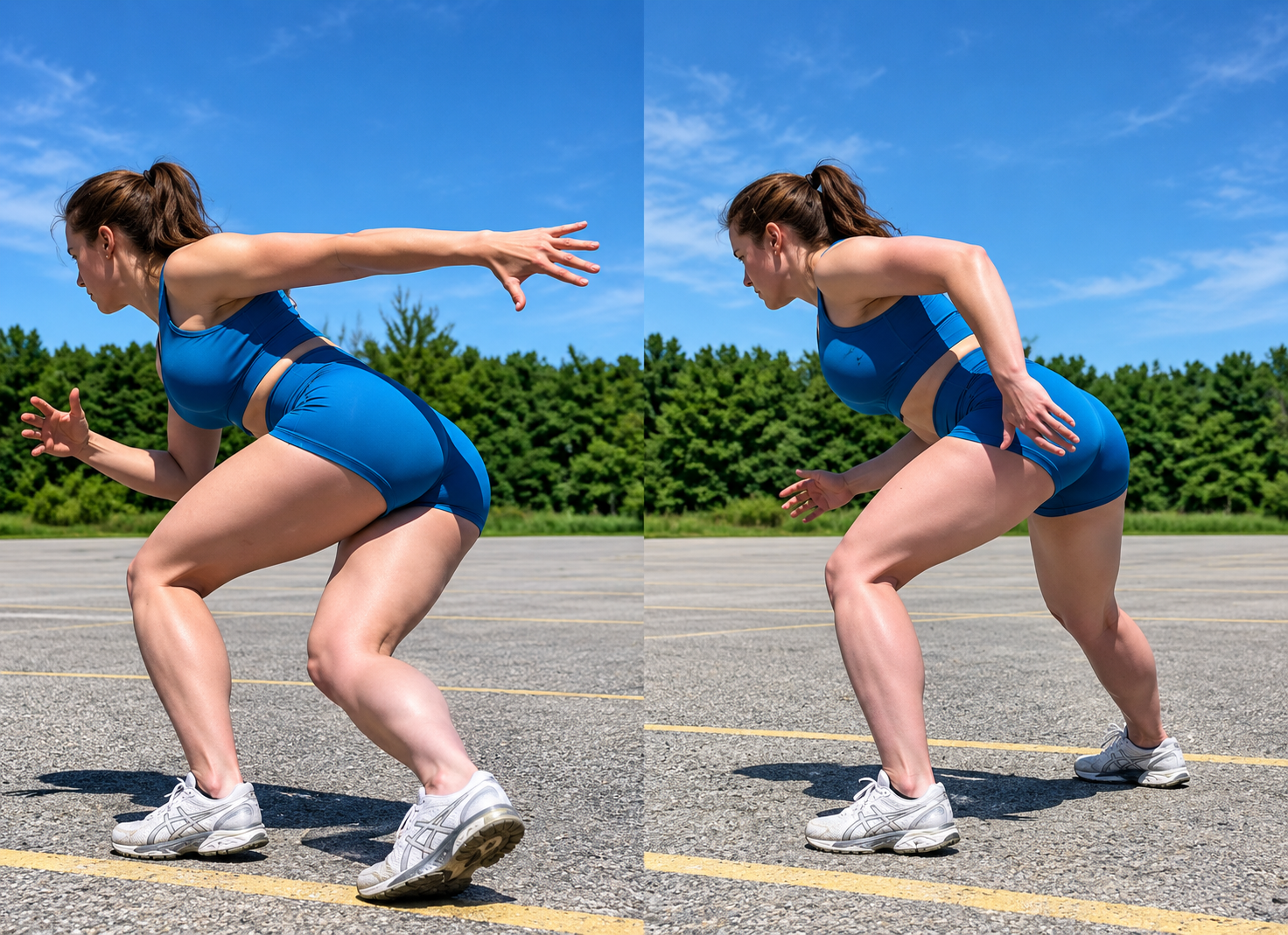
A 20-minute HIIT workout can be one of the most efficient ways to train when your schedule is tight and you want to feel like you actually accomplished something. High-intensity interval training alternates short bursts of hard effort with brief recovery periods, so you can work your entire body, elevate your heart rate, and finish before your coffee gets cold — no gym membership required.
This full-body high-intensity routine is designed for home training with zero equipment, though a mat and a timer help. It suits beginners who are willing to scale the intensity, intermediate exercisers who want a time-efficient sweat session, and anyone who prefers short, focused workouts over long, steady cardio. Below you’ll find the complete routine, exercise form cues, beginner modifications, progression options, and answers to the questions people ask most about at-home HIIT.
What Is a 20-Minute HIIT Workout and Who Is It For?
HIIT means alternating between short periods of hard effort and short recovery periods. A well-built HIIT session usually uses work intervals of 20 to 45 seconds and rest intervals of 15 to 40 seconds, repeated in rounds or circuits.
This particular session is full-body because it combines lower-body, upper-body, and core movements. That matters for two reasons: it trains more muscle groups in less time, and it keeps your heart rate elevated between exercises instead of letting it drop during long transitions.
The workout fits people who:
- Have about 25 minutes total, including warm-up and cool-down
- Train at home with limited space and no equipment
- Want a cardio and strength hybrid rather than pure steady-state cardio
- Are comfortable modifying jumping movements if needed
If you’re brand new to interval training, that’s fine — you’ll find low-impact alternatives in the beginner modification section. If you already follow a structured plan, you can slot this in as a conditioning day alongside your strength training or lower-body sessions.
The 20-Minute Full-Body HIIT Routine
Here’s the structure: 40 seconds of work, 20 seconds of rest, 5 exercises per round, 4 rounds. That’s 20 minutes of training time after your warm-up.
Each round contains one lower-body exercise, one upper-body exercise, one lower-body plyometric (or low-impact option), one core exercise, and one full-body movement. This arrangement spreads fatigue around so no single muscle group fails early.
Round Structure at a Glance
| Order | Exercise | Work | Rest | Primary Focus |
|---|---|---|---|---|
| 1 | Bodyweight Squats | 40 sec | 20 sec | Quads, glutes, thighs |
| 2 | Push-Ups (or Knee Push-Ups) | 40 sec | 20 sec | Chest, shoulders, triceps |
| 3 | Squat Jumps (or Squat to Stand) | 40 sec | 20 sec | Explosive lower body |
| 4 | Plank Shoulder Taps | 40 sec | 20 sec | Core, shoulders |
| 5 | Mountain Climbers | 40 sec | 20 sec | Full body, cardio |
Complete this sequence four times with a 60-second rest between rounds. Total: roughly 20 minutes.
Warm-Up (3 Minutes)
Never skip this. Cold muscles and stiff joints don’t respond well to sudden intensity.
- March in place — 30 seconds
- Arm circles forward and back — 30 seconds
- Hip circles — 30 seconds
- Bodyweight squats at a slow tempo — 45 seconds
- Inchworms or standing hamstring sweeps — 45 seconds
Cool-Down (2 Minutes)
Walk in place until your breathing settles, then hold a few gentle stretches: quad stretch, chest opener, hip flexor stretch, and a slow forward fold. Skip static stretching before the workout; save it for afterward when muscles are warm.
How to Perform Each Exercise With Good Form
Form is what separates a productive HIIT session from a tweaked knee. Move with control even when you’re working hard.
Bodyweight Squats
Stand with feet shoulder-width apart, toes slightly out. Brace your core, then sit your hips back and down as if reaching for a chair. Keep your chest tall and knees tracking over your toes. Drive through your whole foot to stand. Common mistake: letting the knees cave inward or heels lift off the floor.
Push-Ups
Start in a high plank with hands slightly wider than shoulders, body in a straight line from head to heels. Lower your chest toward the floor with elbows at roughly 45 degrees from your torso, then press back up. Form cue: squeeze your glutes so your hips don’t sag or pike.
Squat Jumps
Lower into a squat, then drive explosively through your feet to jump. Land softly with knees bent and immediately absorb into the next squat. Keep landings quiet — loud landings usually mean you’re not controlling the descent.
Plank Shoulder Taps
From a high plank, tap your right hand to your left shoulder while keeping hips square to the floor. Alternate sides. The goal is zero hip rotation. If your hips rock side to side, widen your feet for more stability.
Mountain Climbers
From a high plank, drive one knee toward your chest, then switch legs quickly. Keep your hips low and your shoulders stacked over your wrists. Common mistake: letting the hips bounce up and down as speed increases.
Beginner Modifications for High-Intensity Training at Home
Intensity is relative. A beginner’s “hard” is different from an advanced trainee’s “hard,” and that’s completely fine. The workout works because you’re pushing your effort level, not someone else’s.
- Squats: Reduce range of motion or hold onto a chair for balance
- Push-Ups: Do them on your knees, against a wall, or on an elevated surface like a couch
- Squat Jumps: Replace with squat-to-stand or a slow bodyweight squat with a pause
- Plank Shoulder Taps: Do a standard forearm plank with no taps
- Mountain Climbers: Step one knee in at a time instead of running them
You can also change the timing: try 30 seconds work, 30 seconds rest, or complete only 3 rounds instead of 4. Doing the workout at a pace you can recover from is better than burning out in round one.
How to Progress Over Time
Progression matters more than any single workout. Once this session feels manageable, you have several ways to make it harder without adding equipment:
- Add a round. Go from 4 rounds to 5 for a 25-minute session.
- Increase work time. Move from 40/20 to 45/15.
- Reduce rest between rounds from 60 seconds to 45, then 30.
- Slow the tempo on squats and push-ups to increase time under tension.
- Upgrade the variation. Switch to decline push-ups, jump lunges, or plank jacks.
- Add light resistance — a pair of dumbbells, a resistance band, or a backpack with books.
Change one variable at a time. If you increase work time and reduce rest on the same day, your form will likely fall apart, which defeats the purpose.
Tips for Getting the Most Out of This HIIT Workout
- Use a visible timer. A phone interval app or a simple countdown timer keeps you honest and removes guesswork.
- Warm up properly every time. Even three minutes of dynamic movement reduces injury risk and improves output.
- Control the eccentric phase. Lowering with control builds strength and protects joints better than rushing reps.
- Breathe rhythmically. Exhale on the effort, inhale on the return. Holding your breath raises blood pressure unnecessarily.
- Prioritize recovery between sessions. Aim for 48 hours before repeating the same HIIT session. Fill the gap with walking, mobility work, or a core strengthening session.
- Track your rounds and reps. A simple note in your phone helps you see progress and prevents plateaus.
- Stop if you feel sharp pain. Discomfort from effort is normal; joint or sharp pain is not. If something feels wrong, stop and seek qualified guidance.
Common Mistakes to Avoid
Most HIIT problems come down to a few predictable errors.
- Treating every second like a sprint. If you can’t maintain form for the full 40 seconds, you started too fast. Pace the first 10 seconds.
- Skipping the warm-up. Cold muscles plus explosive movement is a recipe for strains.
- Letting rest intervals vanish. The rest periods are part of the workout, not wasted time. Skipping them lowers your output across every round.
- Doing HIIT daily. High-intensity training is demanding. Most people do well with two to three sessions per week, paired with other forms of training.
- Ignoring form as fatigue sets in. When reps get sloppy, drop to a regression rather than pushing through bad movement.
- Using it as the only training. HIIT is a great complement to strength training and dedicated lower-body or glute-focused work — not a full replacement for them.
Frequently Asked Questions
How often should I do this 20-minute HIIT workout?
Two to three times per week is a practical target for most people. This leaves room for strength training, walking, and recovery days. Beginners may start with one or two sessions per week and build up gradually as their fitness improves.
Can I do this workout if I’m a complete beginner?
Yes, with adjustments. Use the beginner modifications listed above, reduce rounds to two or three, and lengthen the rest periods. Focus on completing the movements with good form before worrying about speed or intensity.
Do I need any equipment for this workout?
No equipment is required. A mat helps for the floor exercises, and a timer or interval app keeps you on track, but neither is strictly necessary. If you want more resistance later, a pair of light dumbbells or a resistance band adds variety.
Can I do this workout at home in a small space?
Absolutely. All five exercises fit within a single mat’s footprint. If you’re concerned about noise from jumps, swap squat jumps and mountain climbers for the low-impact alternatives described in the modifications section.
Will this workout help me lose belly fat?
No exercise can target fat loss from a specific area. HIIT can support calorie expenditure and cardiovascular fitness, which may help with overall body composition when combined with good nutrition, adequate sleep, and consistent activity. Core exercises strengthen abdominal muscles, but visible muscle definition depends on total body fat, which varies from person to person.
How long does it take to see results?
Timelines vary greatly based on your training history, nutrition, sleep, stress, and genetics. Instead of chasing a fixed deadline, focus on consistency: aim to complete your planned sessions each week and gradually increase the challenge. Progress in fitness tends to be gradual and non-linear, and that’s normal.
Can I do this workout on the same day as strength training?
It’s possible, but it’s usually better to separate them by a few hours or a day. If you must combine them, do the strength training first so fatigue doesn’t compromise your heavier lifts, then finish with HIIT if you still have energy.
Conclusion
This 20-minute HIIT workout offers a straightforward, full-body training option you can do at home with no equipment. Use the 40/20 interval structure, follow the warm-up and cool-down, and adjust the intensity to match your current fitness level. Beginners should modify freely; experienced trainees can add rounds or reduce rest to keep progressing.
Remember that HIIT is a tool, not a magic solution. Pair it with regular strength training, a balanced approach to nutrition, sleep, and recovery, and the results will follow in their own time. If you enjoyed this session and want more routines — from beginner leg workouts and glute-focused training to abs circuits and at-home HIIT variations — explore the full library at workout.serile.com and find the next workout that fits your goals.